Written by:
We Haul Texas Team
Published:
September 4, 2026
Learn how to pack a moving box so it survives loading, stacking, and transport. Box weight limits, sealing tips, and labeling rules Houston movers rely on.
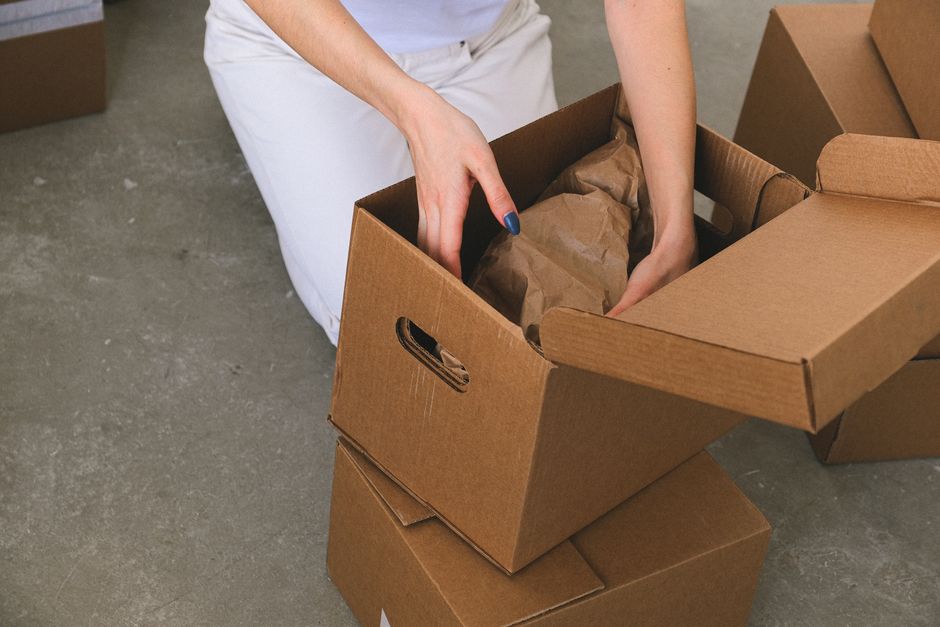
A moving box is packed correctly when it closes flat without bulging, weighs under about 50 pounds, and has no empty space inside that lets contents shift. Get those three things right and a box survives being stacked, tilted, and jostled in a truck for hours. Get them wrong and you end up with a crushed lid, a torn bottom, or a box of dishes that arrives as gravel.
Most people think packing a box is just putting items in and taping it shut. Movers reject or re-pack boxes constantly for the same handful of preventable reasons: overloaded bottoms, wrong box size for the item, and loose contents with no cushioning. None of that requires special skill to fix. It just requires knowing what a box actually has to survive between your old house and the truck.
A standard small box (1.5 cubic feet) should stay under 30 pounds, a medium box (3.0 cubic feet) under 40 pounds, and a large box (4.5 cubic feet) under 50 pounds. Past those weights, the bottom seam is likely to blow out the moment someone lifts it, especially after a few hours in a hot truck softens the cardboard.
This is why dense items like books, tools, and canned goods belong in small boxes even though they'd technically fit in a bigger one. Large boxes should be reserved for light, bulky items like linens, pillows, and lampshades. If you have to sit on a box to close it, it's overloaded regardless of what size it is.
Before sealing any box, pick it up by the side handles (not the top) and hold it for five seconds. If the bottom sags, flexes, or you hear cardboard creak, redistribute the weight into a second box before you tape it shut.
A properly sealed box uses the H-taping method: one strip down the center seam of the bottom, then one strip along each side seam, forming an H. The same pattern gets repeated on top after packing. Crossing tape corner to corner or using just one strip down the middle is the most common reason bottoms fail mid-move.
Use proper packing tape, not masking tape or duct tape. Masking tape doesn't hold under weight, and duct tape leaves residue and tends to peel at the edges once cardboard flexes. Run tape past the seam onto the flat cardboard on both sides for a real seal, not just a strip stuck to the crease.
Contents stay put when the box is packed heavy-to-light from bottom to top and every gap is filled with cushioning material. An empty box always looks fine at your kitchen table; it's the four hours of tilting, stacking, and highway vibration afterward that expose loose packing.
A reliable order inside most boxes:
Shake the box gently before sealing. If you hear or feel movement, add more filler. This single check catches most breakage before it happens rather than after you unpack.
Wrap dishes, glasses, and small breakables individually, then pack them vertically (on their edge, like records) rather than flat stacked. Vertical plates and glasses distribute impact along the rim instead of the flat center, where cracks usually start. If a box holds mostly fragile items, keep it small and label it clearly so it never ends up at the bottom of a stack.
Match the box to the item's density, not just its size. A box that's technically big enough for an item can still be the wrong choice if that item is heavy, because weight and volume are two different problems.
If you're unsure whether an item needs a specialty box, that's usually a sign it does. Odd-shaped, fragile, or high-value items (artwork, mirrors, electronics with original packaging) hold up far better in a box built for their shape than one that's simply "close enough."
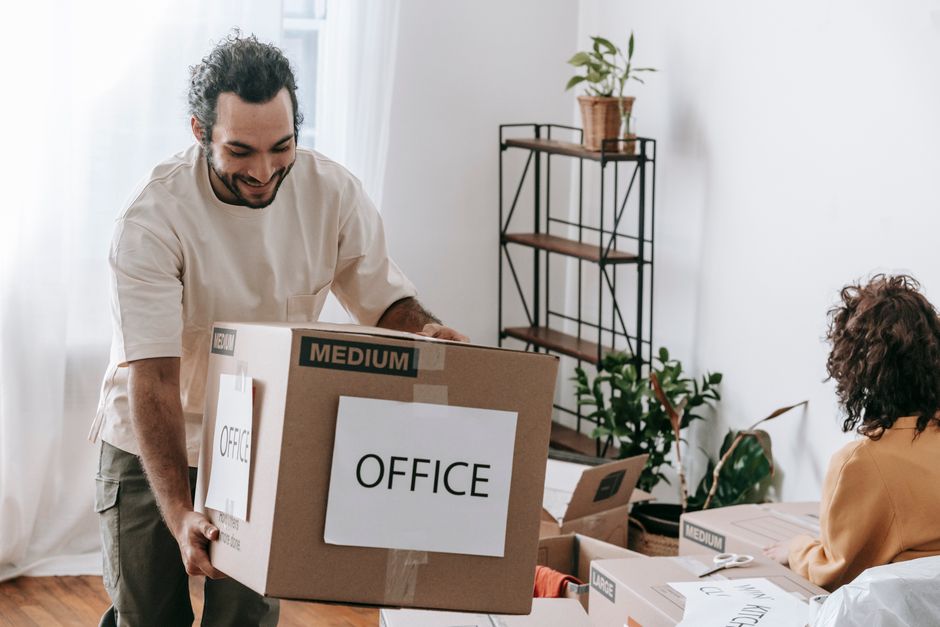
A well-labeled box tells the movers three things at a glance: the destination room, whether it's fragile, and which side is up. Labels only work if they're on the side of the box, not just the top, since boxes get stacked and the top is rarely visible during loading.
Write the destination room in large letters on at least two sides, mark "FRAGILE" clearly on any box with breakables, and draw an arrow or write "THIS SIDE UP" on boxes that must stay upright. Skip vague labels like "misc" or "stuff," since those boxes tend to get set down wherever there's floor space and opened last, which is exactly backwards from what you usually want.
Self-packing makes sense for everyday items you're comfortable wrapping and boxing yourself. It stops making sense for large volumes on a tight timeline, or for anything genuinely fragile or high-value where a bad box costs more to replace than a professional pack would have cost. If you're staring down a full house in a weekend, the math often favors paying for help rather than losing a Saturday to bubble wrap.
A professional packing service uses commercial-grade boxes and materials suited to what you actually own, which matters more than most people expect once fragile or oddly shaped items are involved. For pianos, curio cabinets, and other awkward specialty pieces, standard boxing isn't an option at all. Those need specialty item movers equipped for the weight and shape rather than a bigger box and more tape.
If you'd rather box everything yourself but want the truck loaded and hauled by people who do it daily, a labor-only moving crew can pick up the day of the move without asking you to book a full-service package you don't need.
Whichever route you choose, the goal is the same: boxes that survive the trip so unpacking is the only work left to do. Once your boxes are packed, sequencing how they get loaded onto the truck matters just as much. Our guide on how to pack a moving truck covers the loading order that keeps sealed boxes from getting crushed once they're on board.
If you're weighing DIY packing against hiring it out entirely, get a sense of what full-service support costs before deciding. Get a moving quote and we'll walk you through what's actually worth paying for based on what you're moving.
Only for light items. Grocery and liquor store boxes are often designed for a single delivery trip and lose structural strength after being broken down and reassembled. They're fine for pillows, linens, or paper goods, but avoid them for anything heavy or fragile since the seams weren't built for repeated handling.
It varies widely by home size, but a rough starting point is 8 to 12 boxes per room for an average household, split across small, medium, and large sizes. Kitchens and closets typically need more small and medium boxes than bedrooms or living rooms.
Pack them tight. A box that isn't full enough will collapse inward when stacked, even if nothing inside is heavy. Fill remaining space with packing paper, towels, or clothing rather than leaving air pockets.
Yes, ideally the original manufacturer box if you still have it, since it's molded to the exact dimensions and includes foam inserts. Without the original box, a flat-screen or picture box with foam corner protectors is the next best option rather than wrapping it in blankets alone.
Putting dishes flat in a stack instead of vertical on their edge. Flat-stacked plates crack far more often because the weight presses straight down on the center. Standing them on edge, individually wrapped, spreads the impact along the sturdier rim.
From Downtown and the Heights out to Katy, Cypress, Sugar Land, Pearland, Kingwood and Clear Lake — if it's in Greater Houston, we cover it. Not sure if you're in range? Call (832) 870-1218; we usually are.
Whether you’re moving a home, apartment, office, or just a few heavy items, We Haul Texas is ready to help make the process easier.